


Most people assume a fire hose is just a heavy-duty garden hose. It is not. The first time we had a buyer order the wrong type for an offshore platform, the entire shipment came back. Not because the product was defective, but because nobody asked the right questions before placing the order. That is what this post is about.
So, What Exactly Is a Fire Hose?
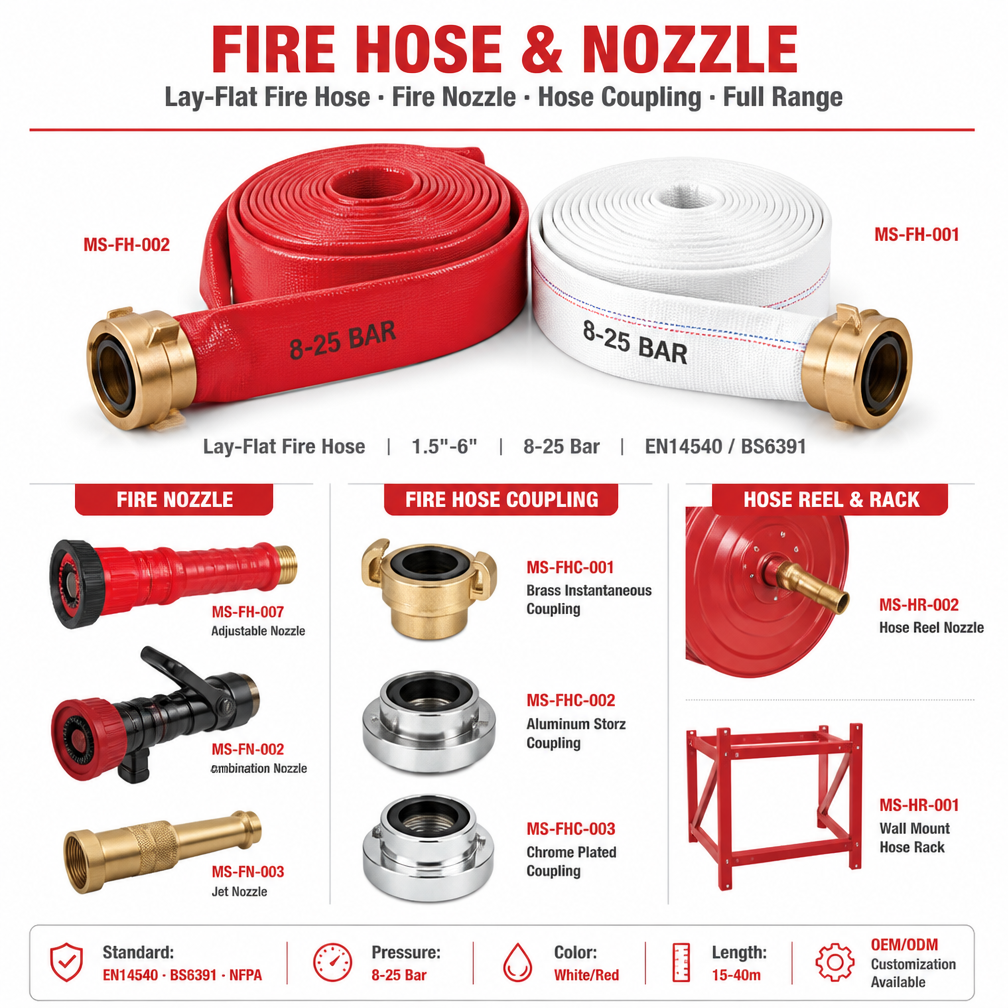
A fire hose is a high-pressure flexible tube built to carry water or foam from a source, usually a hydrant or pump, to wherever the fire is. Simple concept, but the execution matters a lot. The fire hose types on the market today range from lightweight cabinet reels to heavy rubber attack hoses used on fire trucks. Each one is built for a specific job, and using the wrong fire hose type in the wrong situation is where things go wrong.
Here is the thing most buyers miss: there is no single fire hose that does everything well. A hose designed for indoor standpipes is built differently from one used outdoors in a factory yard. The pressure ratings are different. The fire hose material is different. The coupling thread may be different depending on which country it is going to.
What Is a Fire Hose Actually Made Of?
Three layers. That is the basic structure of any modern firefighting hose.
The inside is the liner, which is what the water actually touches. Rubber, PVC, and TPU are the three options. Rubber handles heat well. PVC is cheap but goes stiff in cold weather. TPU is the current go-to for export orders because it is lighter, smoother inside, and holds up in humid or marine environments without degrading.
The middle layer is the jacket, usually woven polyester. This is what gives the fire hose its pressure rating. Single jacket means one woven layer. Double jacket means two, which raises the burst pressure and makes the firefighting hose more resistant to being dragged across rough ground.
The outer layer protects everything. If the hose is going into a fixed indoor cabinet, a PVC cover is fine. If it is going on a vehicle or getting used outdoors, rubber or TPU is worth the extra cost.
Why Do Fire Hose Sizes Matter?
Fire hose sizes are measured by internal diameter. The most common export size we deal with is DN65, which is 2.5 inches. It fits most standard hydrant systems and works with typical cabinet setups.
Smaller sizes like DN40 and DN50 are for light commercial buildings. Larger ones like DN80 and DN100 are for high-flow situations. Getting the fire hose size wrong usually means the hose does not physically fit the system it connects to, which nobody wants to find out after the shipment arrives.
What Most Buyers Overlook
The fire hose material and fire hose size questions get asked a lot. What does not get asked enough is the coupling thread standard.
Different regions use different thread systems. Europe uses Storz or BSP. The US uses NST. If the thread does not match the local hydrant standard, you have a firefighting hose that is useless out of the box. Ask your supplier for actual certification test reports before the order goes in. EN 14540 covers European markets. BS 6391 is widely recognized in the Middle East, South Asia, and East Africa.
Wrapping Up
A fire hose looks simple. The buying decision is not. The fire hose types, fire hose material, and fire hose sizes all depend on where it is going and what it needs to do. Get those three things right and you avoid most of the problems we see in the field.
If you are working on a procurement spec or need help matching the right firefighting hose to a project, feel free to reach out. Minshan Fire-Fighting has been making this product since 1982 and we have shipped to buyers in more than 50 countries.
Post time: Sep-07-2026