


Walk into almost any commercial building, parking structure, or hotel hallway and you will spot a red metal box mounted on the wall. Or an exposed circular drum holding a rolled-up black line. Most people glance right past them. But if you are reviewing architectural plans or ordering gear for a project, people throw the terms around as if they mean the exact same thing. They simply do not.
A fire hose reel and a fire hose cabinet are related, but they serve different operational roles on site. Specifying the wrong one can stall your fire inspection, force costly wall rework, or leave building occupants with hardware they are not equipped to operate.
Here is a straightforward look at how each setup works, how they differ, and what to verify before placing an order.
What Is a Fire Hose Reel?
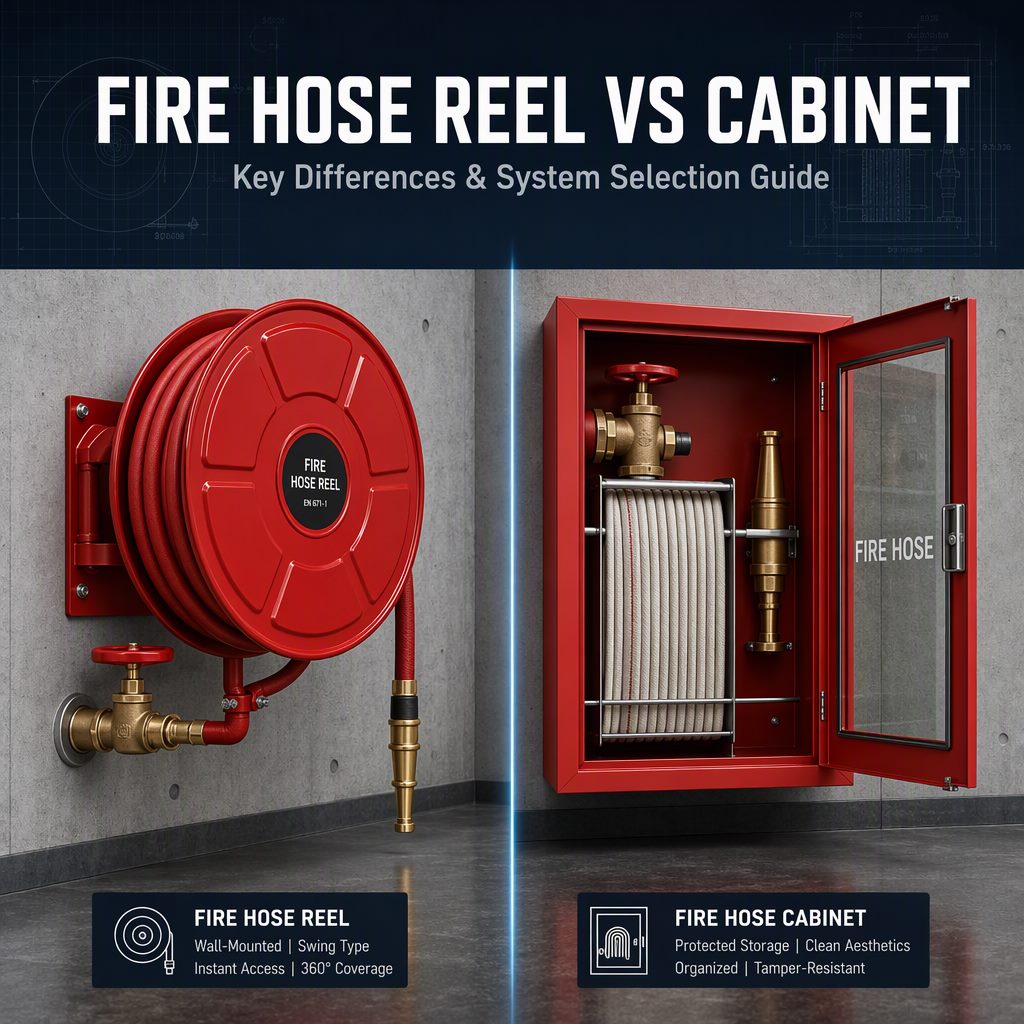
A fire hose reel is a permanently mounted drum holding semi-rigid hose, typically 30 meters long with a 19mm or 25mm bore.
The critical engineering detail is that the drum connects directly to the building’s pressurized water supply through an internal waterway. That means the fire hose line stays charged. Always. You do not have to unroll the entire length before opening the valve. One person can pull off just five meters of hose, twist the nozzle open, and immediately start attacking an incipient flame. It works immediately.
Because the hose is reinforced so it cannot crush flat under pressure, water flows freely even while the rest of the coil stays wrapped on the core. That makes a fire hose reel the ideal first-aid firefighting device for regular building occupants before emergency crews arrive.
What Is a Fire Hose Cabinet?
A fire hose cabinet is an enclosure built into or mounted onto a wall to house and protect firefighting equipment.
Here is where procurement gets confusing. Some cabinets are designed specifically to enclose a fire hose reel, keeping the drum clean and protected from tampering. In other installations, a fire hose cabinet houses a lay-flat fire fighting hose folded over a swinging pin rack, connected to a dedicated angle valve.
That pin-rack setup is completely different. A lay-flat fire fighting hose cannot deliver water while it sits folded on a rack. Not a single drop. The full length must be pulled completely off and laid straight along the corridor before the valve is cracked open. If water enters a folded line, the hose kinks immediately and blocks all flow. That is why folded lay-flat systems are intended strictly for trained personnel or responding firefighters.
When a project calls for enclosing both the drum and supplementary fire extinguishers behind a single finished door, contractors specify a combination fire hose reel cabinet. This type of fire hose reel cabinet keeps all primary suppression gear organized in one clean, flush-mounted unit.
The Practical Differences on Site
Choosing between them comes down to three operational factors:
Who uses the gear? If the goal is allowing office staff or warehouse workers to tackle small flames right away, install a fire hose reel. It is completely intuitive. If the installation is meant solely for municipal fire crews connecting their own lines, a rack-mounted fire fighting hose inside a dedicated fire hose cabinet is what the fire code typically calls for.
Installation footprint and mounting. An exposed fire hose reel swings out on an arm, requiring clear corridor swing space. A recessed fire hose cabinet sits flush inside the wall cavity, keeping walkways clear.
Water supply requirements. A standard fire hose reel operates on normal domestic booster pressure. Heavy-duty lay-flat fire fighting hose lines demand dedicated fire pumps capable of delivering substantial volume and pressure.
What to Confirm Before Ordering
Before sending off an RFQ, verify these three details:
- Does the job call for an occupant-use fire hose reel or a fire department lay-flat hose?
- What are the cabinet dimensions and wall depth (recessed, semi-recessed, or surface mount)?
- Does the specification call for a bare reel, a standard fire hose cabinet, or a complete fire hose reel cabinet package?
Taking two minutes to confirm these points prevents weeks of shipping delays and costly field modifications later.
Post time: Oct-08-2026